
 RRL
 Freenote Cloth
 Merz B. Schwanen
 Red Wing
 Hiroshi Kato
 Schott NYC
 UES Clothing
 Dehen1920
 Polo Ralph Lauren
 West Major
 Shinola
 Amundsen
 MOSCOT
 Peregrine
 Shangri-La Heritage
 Astorflex
 Iron and Resin
 Ampal
 Jungmaven
 Big D Speedshop
 Fulton & Roark
 Howler Bros
 AO Eyewear
 Rails
 Ranger Station
 Bellroy
 Filson
 Sabah
 Birdwell
 Secrid
 Taschen
 Schwood
 Bradley Mountain
 American Trench
 Studebaker Metals
 Unmarked
 Texas Standard
 Rhythm
 Oxford Pennant
 Gestalten

 Girls of Dust
 Road to Nowhere
 Filson
 Marine Layer
 Rails
 THE GREAT.
 Shinola
 Diadora
 Astorflex
 Retro Brand

PoloFest Tokyo, and the Labels That Made Polo
For three days last weekend, Harajuku became the capital of vintage Polo. The festival Ralph Lauren threw in Tokyo was really a family reunion — every label the company ever made, gathered under one roof by the people who never stopped wearing them.

PoloFest Tokyo — Ralph Lauren's first vintage Polo festival, Jing Harajuku, October 23–25, 2026. Key art: Ralph Lauren.
01 — The First PoloFest

“Off The Cuff” — the festival's speaker series: three days of collectors' confessions, archive talks, and Ametora panels.
On October 23–25, 2026, Ralph Lauren held the first-ever PoloFest in Tokyo — a three-day event at Jing Harajuku, in Shibuya, built around vintage Polo, collectors, an archive exhibition, and live conversations. Admission was free, through Ralph Lauren's LINE membership community in Japan.
Tokyo was not a random first stop. Polo arrived in Japan in 1976, opening its first shop inside Seibu in Ikebukuro, with a runway show at the Tokyo Prince Hotel that same year. Fifty years later, Japan is still one of Polo's most passionate communities — and the event was also the opening chapter of the celebrations leading to Ralph Lauren's 60th anniversary in 2027.
Inside, the festival was organized the way a collector would organize it. Seventeen vintage dealers from Japan, the U.S., Canada, the U.K., and Italy sold from a market curated around four Polo sensibilities: English Tweed, Polo Country, Polo Sport, and Outdoorsman. The exhibition traced the exchange between Polo and Japan. And a group of Japanese artisans reworked Polo pieces by hand — BROWNTABBYWORKS, which repairs vintage clothing; SASHIKO GALS, a group in Otsuchi, Iwate, practicing sashiko, the traditional stitching used to reinforce, repair, and decorate textiles; and Mitsugu Sasaki, known for reworking vintage textiles and garments. Even the Polo Bear got the treatment, dressed in outfits incorporating sashiko and other Japanese handcraft.
That last part is the whole point of the festival, and the whole point of this article. Polo was never one label. It was a family of labels, each one a different version of Ralph Lauren's American idea — and the people who wore them, repaired them, and kept them in circulation are the reason a festival like this exists at all.
02 — 1967: The Necktie That Became a World

The original label: Polo by Ralph Lauren, made in U.S.A.
Ralph Lauren started in 1967 with a line of wide-cut men's neckties under the Polo name, sold out of a drawer in the Empire State Building. The full Polo Ralph Lauren menswear line followed, and it became the company's core: the polo shirt, the oxford, the chino, the cable knit, the blazer — Ivy League and English tailoring filtered through an American imagination. Women's Polo, in its modern form, came much later, in 2014, but the Ralph Lauren Collection for women dates to 1971.
If you only know one label, this is it. Everything else in this story is a variation on it.
03 — The Rugged Turn: Polo Western and Polo Country

The Polo Western label, 1979 — the West, first attempt.
Ralph Lauren's second American idea was the West. Polo Western Wear launched in 1979 — denim, cattleman jackets, rodeo shirts, fringe jackets, felted hats — and it was short-lived, which is exactly why original pieces are so sought after now.

Polo Country: “Authentic Dry Goods,” est. 1967.
Polo Country followed in 1988, and it lasted longer and mattered more. It was an Americana and country-store label: heavy flannels, waxed cotton, cable knits, tweed, Navajo prints, denim washed hard. It was the direct ancestor of the label Cave and Post customers know best.
04 — RRL: Polo Country, Reborn

The RRL Western Wear label — “You're wearing a genuine.”
In 1993, Ralph Lauren spun that world off into its own brand: Double RL — RRL — named for Ralph and Ricky Lauren's ranch in Colorado. Think of it as Polo Country's new iteration, not just its successor. Same DNA, given its own name, its own stores, and a sharper mission.
Where Polo Country had been one label inside the Polo line, RRL made the rugged side the entire point. The reference points are the American West of the mid-to-late 1800s and the military gear of the Civil War and both World Wars: gold-rush miners and ranch hands, workwear cut for hard use, fabrics that look like they have already lived a life. Selvedge denim, raw and distressed. Leather boots and jackets, tumbled and worn in. Navajo-print blankets and heavy flannels. Waxed cotton, cable knits, and tweed carried over from the Polo Country days, but now made with old methods on purpose — the distressing, the washing, the hardware, and the fit are the design, not an afterthought.

Double RL — est. 1993, named for the Double RL Ranch in Colorado.
That is why RRL is the label collectors and PoloFest dealers keep coming back to. Polo Country pieces are finite; the label is gone, so every surviving jacket or flannel is a hunt. RRL is the living version of the same idea — the clothes are still being made, still in limited distribution, and still built around the same vintage Americana.
It is also the label that connects this story most directly to the store. RRL is not a nostalgia line at Cave and Post. It is the core of what we sell — the rugged, heritage-workwear side of Polo, made new, in the same spirit as the Polo Country pieces that now trade hands at vintage markets in Tokyo.
“If Polo Country was Ralph Lauren discovering the West, RRL is him moving there.”
05 — The Sporty Turn: Polo Sport and RLX
In 1992, Polo went in the opposite direction: Polo Sport, an activewear line built for sports and fitness, with big graphics, bold color, and the American flag. It gave Ralph Lauren credibility with a younger, streetwear-adjacent crowd that the main line never would have reached on its own. Polo Golf had already launched in 1990.
In 1998, the technical side of Polo Sport evolved into RLX — Ralph Lauren Extreme — which is still the company's performance label today, including RLX Golf. The original Polo Sport line itself was discontinued in the mid-2000s, which is why the vintage market for it, PoloFest included, runs so hot.
06 — The Luxury Turn: Purple Label

The family in one stack: Purple Label on top, Polo in the middle, Chaps underneath.
In 1994, Ralph Lauren went upmarket in earnest with Ralph Lauren Purple Label, the flagship men's label: suiting, made-to-measure, benchmade footwear, and dress furnishings, mostly made in Italy from fine textiles. It was the answer to Savile Row, made in Ralph Lauren's language. The same year brought Ralph by Ralph Lauren, a tailored line of suit separates and sport coats. A decade later, in 2005, Black Label arrived as a slimmer, more modern tailoring line, sitting between Purple Label and Polo.
This is the English Tweed corner of the PoloFest market: the tailoring sensibility, the part of Polo that always owed as much to London as to New York.
07 — The Diffusion Labels: Chaps, Polo Jeans, Lauren, Rugby, Denim & Supply
No history of the labels is honest without the ones that didn't survive — and the ones that were never meant to be precious.
Chaps launched in 1978 as a lower-priced, official alternative to the counterfeits flooding the market around core Polo products. It carried an Ivy League crest sensibility at a department-store price, and it is still around today, licensed, at a lower tier than Polo.
Polo Jeans Co. launched in 1996 as a contemporary, denim-driven casual line. Ralph Lauren killed it in 2006, saying it had been over-produced and over-distributed — a rare case of a company deciding its own label had gotten too big for its own good. Lauren Ralph Lauren, also launched in 1996, took over much of that department-store territory at a lower price point than Polo, and it remains in the family.
Two later experiments are pure collector bait now. Rugby Ralph Lauren, launched in 2004 and discontinued in 2013, aimed at a younger crowd with thick rugby stripes, big logos, and a skull-and-crossbones edge. Denim & Supply, launched in 2011 and discontinued in September 2016, chased the Brooklyn warehouse and music-festival crowd with bohemian, military-inflected denim. Both lasted about a decade or less. Both are exactly the kind of label a vintage dealer at PoloFest builds a table around.
08 — Why Tokyo, Why Now
Japan understood all of this before most of America did. The Japanese fashion movement called Ametora — American Traditional — adopted Ivy League and workwear codes in the postwar decades and then perfected them, remaking American garments with Japanese craft and attention to detail. That is why a festival about worn, repaired, and reinterpreted Polo makes sense in Harajuku and nowhere else first: the sashiko repair, the beautifully worn object, the collegiate tradition, and the English tailoring are not separate interests in Japan. They are one sensibility.
PoloFest's four market themes map almost exactly onto the label history above. English Tweed is Purple Label and the tailoring line. Polo Country is the Polo Country-to-RRL line. Polo Sport is Polo Sport and RLX. Outdoorsman is the workwear world RRL still lives in. The festival was, in effect, a floor plan of Ralph Lauren's own catalog — organized by the collectors who kept it alive.
09 — What It Means at Cave and Post

The living version, on our rack: RRL Westview Denim Trucker Jacket.
We carry the two labels at the center of that story: Polo Ralph Lauren, the original, and RRL, the one that kept the rugged side of it alive. The rest of the labels — Polo Country, Polo Sport, Rugby, Denim & Supply — are the reason the vintage hunt is worth doing. When a piece with one of those labels walks through the door, it is not just an old shirt. It is a chapter of the same story PoloFest just celebrated in Tokyo.
Come see the two labels at the center of the story.
caveandpost.com
Sources: Ralph Lauren's official PoloFest Tokyo page and September 30, 2026 corporate announcement (Oct 23–25, 2026, Jing Harajuku, 17 dealers, four market themes); Fashion Headline's on-the-ground PoloFest coverage (artisans BROWNTABBYWORKS, SASHIKO GALS, Mitsugu Sasaki; sashiko Polo Bears); Ralph Lauren Corporation brand history (label launch and discontinuation years). PoloFest key art and speaker-series poster: Ralph Lauren. Label photographs as supplied; product photograph: Cave and Post Trading Co.
Read more
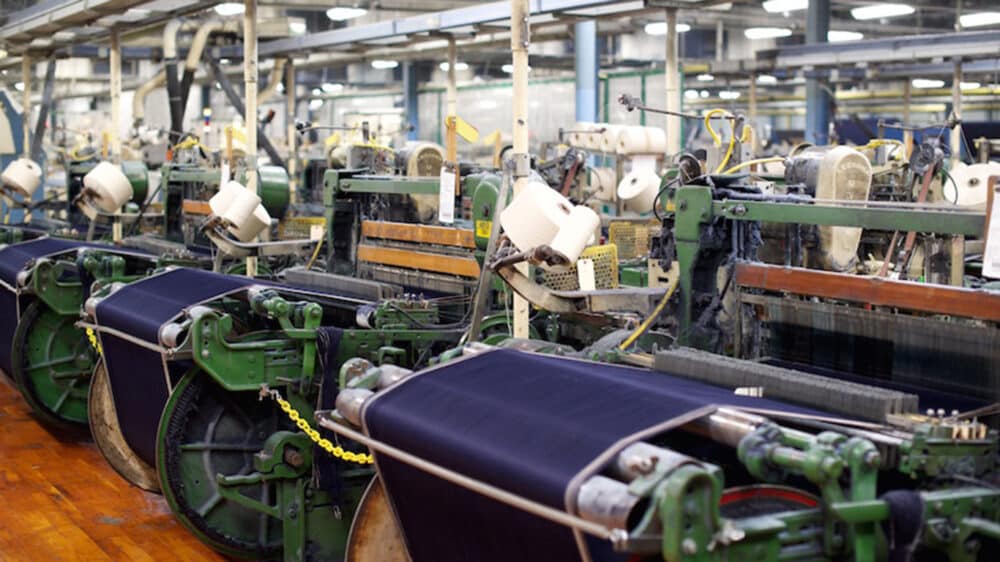
For the first time in nearly a decade, selvedge denim is being woven on American soil. The looms doing it are the same ones that made your grandfather's Levi's — and their road back was anything b...
Read more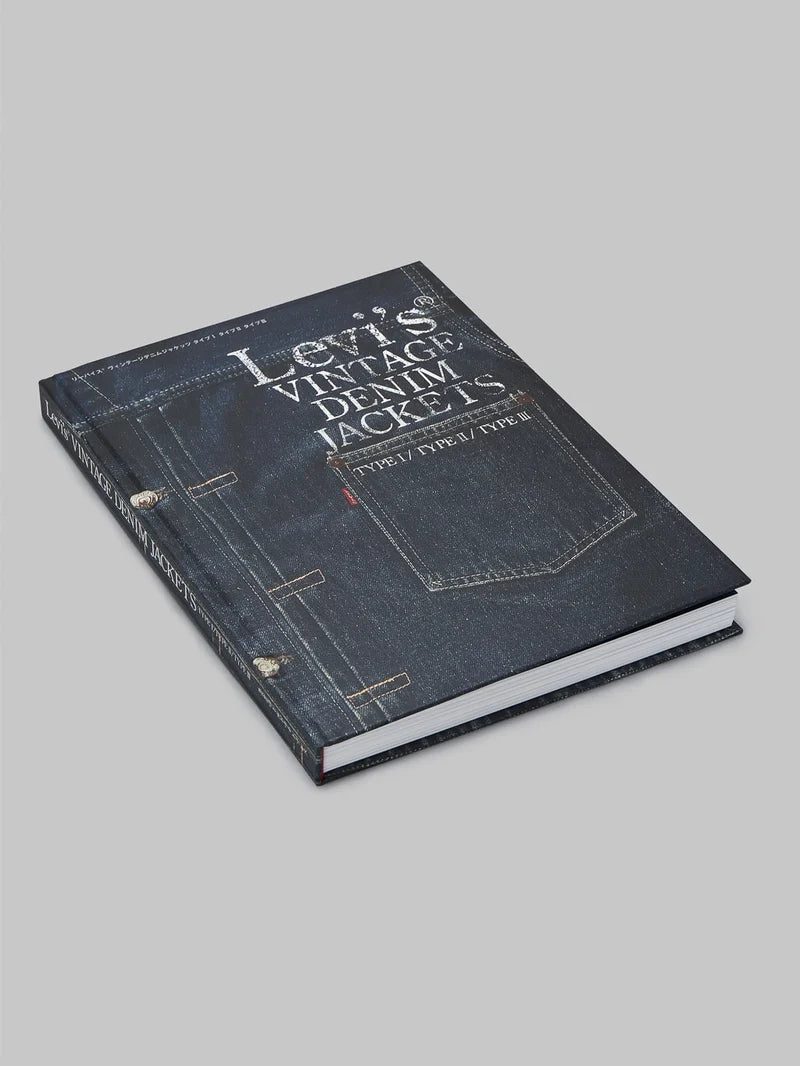
Type I, Type II, Type III: The Levi's Denim Jacket, Sorted
Three jackets, sixty years, and a handful of details — a pocket here, a buckle there — that separate them. Plus the Japanese book that documented every stitch, and why a copy is sitting on our she...
Read more
Leave a comment
This site is protected by hCaptcha and the hCaptcha Privacy Policy and Terms of Service apply.